What Co-Living Teams Should and Shouldn’t Automate
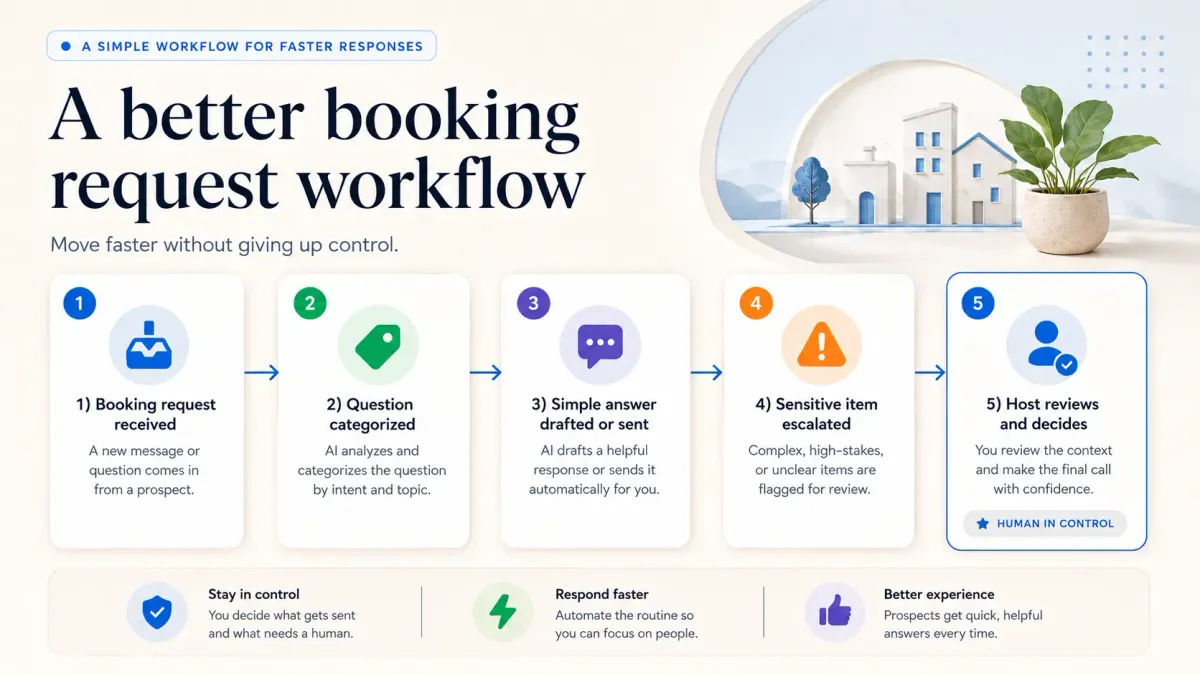
Automation can save time, but not every tenant message should be handled the same way. The best systems move faster while keeping humans in control.
The goal is not full automation
Many co-living operators are interested in AI, but they are also careful. That is a good thing.
Tenant communication is not the same as answering a generic website chat. Some messages are simple. Some are emotional. Some involve safety, payments, rules, access, or resident conflict.
That is why the goal should not be to let AI approve every request or handle every conversation on its own.
The better goal is simple: automate the routine, draft the unclear, and escalate the sensitive.
This approach helps your team move faster without losing control of important decisions.
The three categories every operator should use
1. Simple questions AI can help answer
These are questions where the answer is already known and does not require judgment.
- Is Wi-Fi included?
- Is laundry available?
- Is the room furnished?
- Is there parking?
2. Questions AI can draft for review
These messages may depend on context. AI can prepare a response, but the team should review it.
- Can I move in earlier?
- Can you hold the room?
- Can I bring someone with me?
- Can you call me first?
3. Messages that should be escalated
Some messages should go to the right person quickly and should not be handled automatically.
- Safety concerns
- Legal threats
- Payment disputes
- Resident conflict
Why this matters for co-living teams
Co-living creates a high volume of small messages. One question about parking may not feel like much. But multiplied across rooms, homes, applicants, and current residents, those messages can take over the day.
At the same time, some messages genuinely need a human. A resident conflict, safety concern, access issue, or payment dispute should not be buried inside a busy inbox.
Good automation does not hide sensitive messages.
It brings them to the surface so the right person can step in faster.
That is the difference between risky automation and practical operational support.
Where Tenant Reply fits in
Tenant Reply is built around this human-in-the-loop approach.
It can help answer repetitive questions, draft responses, organize message context, and escalate sensitive situations to the right person.
For co-living operators, that means your team can reduce repetitive work without handing over important decisions blindly.
Next, read: A Simple Booking Request Workflow for Co-Living Operators
Want safer automation for tenant messages?
Schedule a demo and we’ll show how Tenant Reply helps separate simple replies, review-needed messages, and escalations.
Schedule a Demo